
Helping students connect with language, culture, and community

People of Parry Sound Project
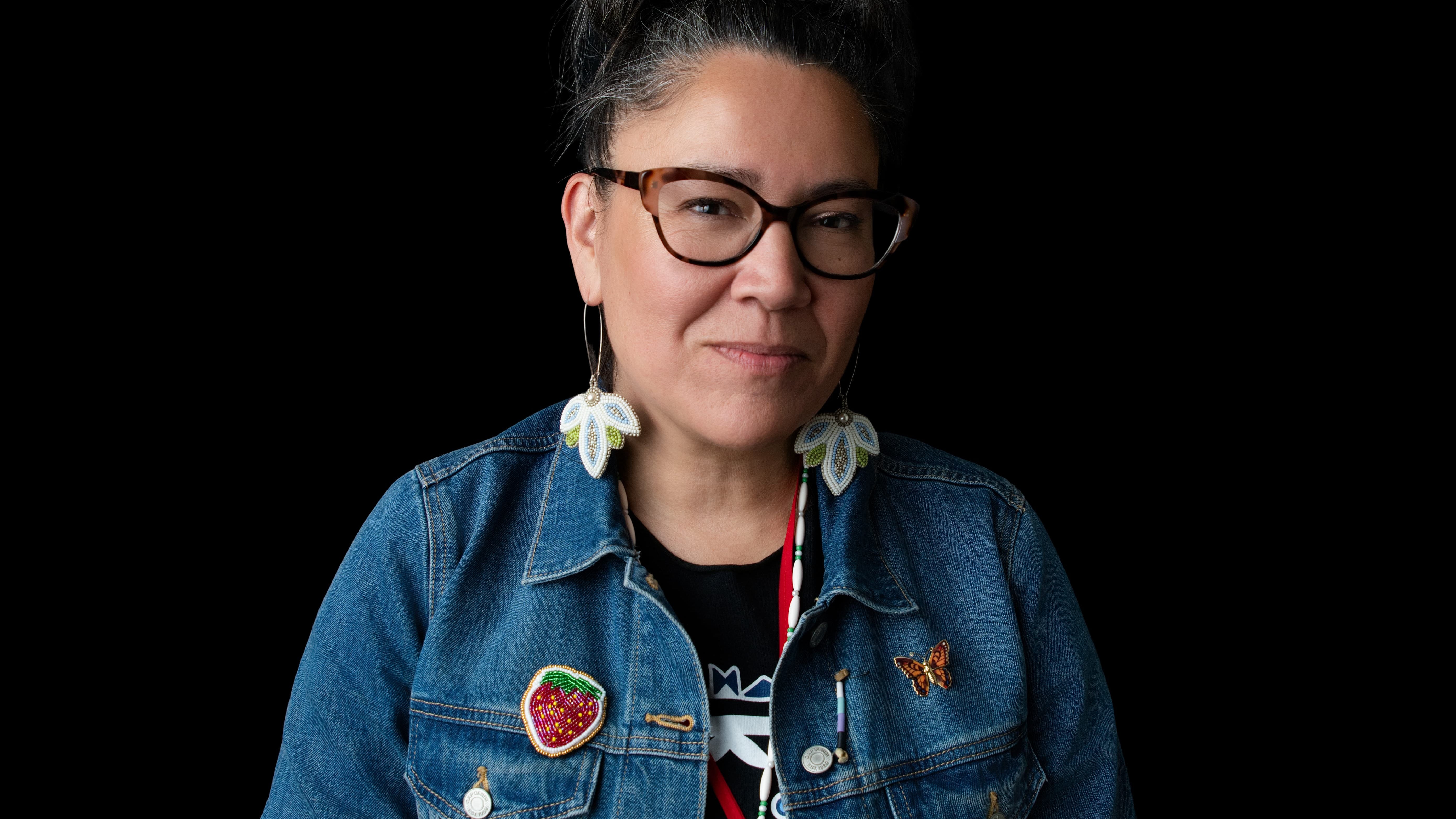
Many people in Parry Sound know Johna Hupfield through Parry Sound High School. For nearly three decades she has worked with students as an Indigenous Studies and Anishinaabemowin teacher, helping young people learn about language, culture, identity, leadership, and community. Through her involvement with Oshki Shkode, the annual school pow wow, language revitalization efforts, and partnerships with Elders and community organizations, she has become a familiar presence for generations of students throughout the region.
Ask people about Johna and they rarely begin by listing her accomplishments. Instead, they talk about how she made them feel. Former students describe her classroom as a place where they felt welcome. Others remember finding support during difficult periods in their lives. Colleagues speak about her patience, her ability to listen, and her willingness to help without seeking recognition. More than one person described her simply as an auntie. It is a title that appears repeatedly in stories shared by students, friends, colleagues, and community members.
While Johna is well known today for her work in Indigenous education, her story begins long before she entered a classroom as a teacher.

Early Life and Family Background
Johna was born in Victoria, British Columbia, where her parents went to live. Although she was born on the west coast, her family's roots remained firmly connected to the Parry Sound area. When she was young, the family returned to Ontario and eventually settled in Carling while maintaining close connections to Wasauksing First Nation and the Indigenous community throughout the region.
Her childhood was shaped by family, community, and the outdoors. She remembers spending time in the bush, building forts, chopping wood, reading books, and exploring the natural world around her. Summers often involved time with cousins and extended family. The Friendship Centre became a second home because her mother worked there, exposing Johna to a steady stream of community activities, gatherings, and relationships.
Looking back, Johna recognizes there were times when money was tight. As a child, however, she rarely thought about it. What she remembers most clearly is how people looked after one another.
"Community was not something people talked about. It was something they practiced."
Family members helped each other. Neighbours stepped in when someone needed support. Food was shared. Children moved easily between households. There was an expectation that people would show up for one another.
When Johna speaks about her childhood, she often returns to the women who helped shape her life. Her grandmother was a constant presence. So were women she still speaks about with great affection and respect, including Auntie Clara, Auntie Audrey, and Auntie Soda. They provided guidance, encouragement, practical advice, and examples of how to care for others.
One story Johna shares involves Auntie from the Island, who recognized opportunities in Johna long before Johna recognized them herself. Family members and community members repeatedly encouraged her to pursue education and leadership opportunities that may not have seemed obvious at the time. Looking back, Johna sees how important those voices were. Many of the paths she eventually followed began because someone believed she was capable of more than she imagined for herself.
When Johna was about 27 years old, her Uncle from the Island, gave her the Spirit Name Naawtinokwe, meaning "Calm Water Woman." She received the name in a lodge on Wasauksing and remembers her Uncle smiling as he announced it. Johna laughs that while the name fits most days, there are times when the opposite of calm water appears as well.

Growing Up Between Worlds
As a child, Johna heard Anishinaabemowin spoken around her. She heard it at the Friendship Centre, during visits with family, and while spending time on Wasauksing. Her mother understood the language, but rarely spoke it herself.
At the time, Johna did not think much about it. She assumed that one day she would simply learn the language too. It was around her often enough that it seemed inevitable.
But it never happened.
Years later, while attending university, Johna began learning more about residential schools and asking questions about her family's experiences. Her mother had attended residential school and, like many Indigenous women of her generation, lost her Indian Status after marrying a non Indigenous man under legislation that affected thousands of Indigenous families across Canada.
As Johna learned more about that history, she began to better understand why she had grown up hearing the language but never learned to speak it herself.
"It was taken from my mom. It was taken from me. And it was taken from my children."
School was not always easy either. Johna remembers racist comments on school buses and in school hallways and remembers feeling different from many of the students around her. At the same time, she remained closely connected to family, community, and the Friendship Centre, where she spent much of her time growing up.

School Years and Early Experiences
Johna remembers school as both positive and challenging.
She enjoyed learning. She loved reading. She built friendships and participated in activities. At the same time, she became increasingly aware of racism directed toward Indigenous students.
She remembers hearing comments on school buses and in hallways. Some incidents were overt. Others were subtle. Together they created an awareness that Indigenous students were often viewed differently.
Those experiences stayed with her.
One family member remembers a story from those years that still makes them laugh.
A boy at school repeatedly called Johna a girl as an insult.
Eventually, Johna punched him.
The story has become part of family lore, not because of the punch itself, but because it revealed something people still recognize in her today. When Johna believed something mattered, she was willing to stand up for it.
Her younger sister later reflected on that same determination.
"In high school she came home and said she wanted to work with youth and become a teacher, then I saw her do it."
Years later, many former students would describe Johna's classroom as a place where they felt accepted and supported. Some of those experiences may have been shaped by Johna's own time as a student.

Finding Her Path
Johna's interest in working with young people began long before she became a teacher.
Growing up, she spent a great deal of time at the Friendship Centre, where her mother worked. Through youth programs, conferences, cultural gatherings, and community activities, she met people who were dedicating their lives to supporting young people and strengthening communities. Those experiences exposed her to opportunities she had not seen elsewhere and showed her the impact a single person could have on the lives of others.
By the time she reached high school, Johna knew she wanted to work with youth. Her younger sister remembers Johna coming home one day and announcing that she wanted to become a teacher. At the time it was simply an idea. Years later, she watched her sister follow through on it.
For much of high school, Johna assumed college would be her next step. University did not seem like an obvious option. She knew very few Indigenous people who had taken that path, and it was difficult to imagine herself there.
Eventually she decided to apply.
She was accepted and went on to study Indigenous issues and education. Along the way, she continued participating in youth leadership opportunities and community initiatives that reinforced her interest in working with young people.
Teaching gradually became the direction she wanted to pursue. It offered an opportunity to combine many of the things that had influenced her growing up: education, community, culture, and helping young people discover what they were capable of.

Teaching in the North
After completing her education, Johna accepted a teaching position in Peawanuck, a Cree community on the western shore of Hudson Bay.
For someone who had grown up in the Parry Sound area, it was a very different environment. The community was remote, many families continued to spend significant time on the land, and Cree language and culture remained an important part of everyday life.
Johna taught Grades 3, 4, and 5. The experience gave her an opportunity to learn from students, families, Elders, and community members whose perspectives on education were often different from what she had encountered elsewhere.
One conversation stayed with her long after she left. An Elder approached her with concerns about his granddaughter. A translator helped with the conversation. At one point, the Elder compared what he was seeing in the school system to residential school and expressed concern that young people could lose connections to language, culture, and community.
Johna remembers listening carefully. The conversation was difficult, but it forced her to think about education from a different perspective. Years later, she still remembers it.
The experience reinforced something she would carry with her throughout her teaching career: students should never have to choose between educational success and their cultural identity.

Returning Home
When Johna returned to the Parry Sound area, she brought those lessons with her.
She taught at Nobel Public School before eventually joining Parry Sound High School.
Indigenous education was changing, but many opportunities that exist today did not yet exist. Johna became part of a growing effort to create new opportunities for students and strengthen connections between schools and communities.
She worked closely with Elders, community organizations, language speakers, and families. She looked for ways to bring culture, language, and lived experience into the educational environment.
Many of the initiatives people now associate with Indigenous education in Parry Sound developed through years of relationship building rather than formal planning.
The work was gradual.
Relationships were built one student, one family, and one conversation at a time.
One former colleague remembers those early years clearly.
"When I met Johna she was teaching in elementary school and I was a high school teacher. What I noticed at that time was the Indigenous students at PSHS were like shadows. They were present, but not making themselves seen or heard. Many dropped out part way through the year because the support wasn't there for them."
The same colleague later watched the changes that followed.
"When Johna came to PSHS to do the Indigenous program, I was able to witness the gradual transformation to what we see now, where Indigenous students are confidently showing up, carrying their knowledge, sharing it with the school community, generously showing all of us who they are and how they know the world with confidence and pride."

A Classroom That Felt Different
When Johna arrived at Parry Sound High School, she brought with her many of the lessons she had learned from family, community, and her experiences teaching in the North. She believed relationships mattered. Students were more likely to engage in learning when they felt comfortable, respected, and connected.
Over time, students began finding their way to her classroom for reasons that often had little to do with coursework. Some came because they were interested in language or culture. Others arrived because a friend had brought them. Some stopped in during lunch and kept returning.
The room gradually became a gathering place.
There was often tea. Students worked on assignments, planned activities, talked about what was happening in their lives, or simply spent time together. Former students frequently mentioned those informal moments when sharing stories about Johna.
"There are so many, but I just remember having this comfy vibe in her classroom. I could be having the worst day and walk into her class and I'd be able to breathe. And she'd always just know.
One former student described the classroom as the place where they felt most comfortable in the school. Another remembered arriving as a quiet student and gradually becoming involved in activities that eventually led to leadership opportunities. Several recalled conversations with Johna that occurred long after the school day had ended.
Years later, many of those former students still remain connected to her. Some stop to talk when they see her at community events. Others return to visit the school. A number of them now have children of their own.
Several people used the same word when describing Johna, “Auntie”.
It appeared often enough that it was difficult to ignore.

Oshki Shkode and Student Leadership
As Indigenous programming expanded within the school, students began looking for opportunities to become more involved beyond the classroom.
One of the initiatives that emerged from those conversations was Oshki Shkode, meaning New Fire.
The group provided opportunities for students to organize activities, work with community partners, participate in cultural events, and take on leadership roles within the school. Older students often mentored younger students, helping them learn responsibilities that would eventually be passed on to the next group.
Former students frequently mentioned Oshki Shkode when reflecting on their high school years. For some, it was their first experience speaking publicly. For others, it was their first opportunity to organize an event, work with Elders, or represent the school at community gatherings.
Johna watched students who were initially hesitant become increasingly confident over time. Students who were reluctant to speak in front of a group eventually found themselves leading meetings, helping organize events, and mentoring younger students.
Many of the relationships built through Oshki Shkode continued after graduation. Former students remained involved in community organizations, cultural initiatives, education, and leadership roles within their own communities.

The Pow Wow
The annual pow wow at Parry Sound High School developed alongside many of the other changes taking place within Indigenous education.
Johna describes it as a teaching pow wow. Students do not simply attend the event. They help organize it.
Planning begins well before the day itself. Students work with Elders, community members, dancers, singers, volunteers, and school staff. They learn protocols, coordinate logistics, prepare spaces, and help welcome guests.
As the event grew, another pattern emerged.
Students who had once attended as younger participants eventually returned in leadership roles. They helped guide younger students through responsibilities they had once learned themselves.
Community members who responded to the survey often mentioned the pride they felt watching students take ownership of the event. Several pointed to the way students worked together across grade levels and how older students helped teach younger students.
For many students, the pow wow became one of the most visible opportunities to connect classroom learning with community, culture, and leadership.
One student described the changes they witnessed as a "tapestry of firsts."
They remember:
- The first land acknowledgement read at the school.
- The first time a drum song was used for O Canada.
- The first Indigenous flag raised on National Indigenous Peoples Day.
- The first medicine wheel pins presented to Indigenous graduates.
- The first water walk.
- The first outdoor pow wow.
"And those are just some of the ones I was privileged to witness and document with my camera."

Language and Identity
Language became an important part of Johna's work for reasons that were both professional and personal.
As a child, she had grown up hearing Anishinaabemowin spoken around her. She heard it at the Friendship Centre, on Wasauksing, and during visits with family. She always assumed she would eventually learn it herself. That never happened.
Years later, after learning more about residential schools and their impact on Indigenous families, she began to better understand why.
Today, one of the first things Johna teaches students is how to introduce themselves. Students learn their names, where they come from, their community, and, when they know it, their clan. Those introductions often lead to conversations that extend beyond the classroom.
Students begin asking questions about their families. Some talk to parents or grandparents about community connections. Others become curious about stories they have never heard before.
Johna also introduces students to the concept of Niin, meaning "I am." It becomes a starting point for discussions about who people are, where they come from, and how they understand themselves.
One artist who worked with Johna and her students on a mural project remembers being struck by how naturally Anishinaabemowin was woven into the classroom.
"I remember feeling in awe at the way Anishinaabemowin was second nature to her. And I felt jealous, in a good way, that the youth had a teacher like her."
Over the years, Johna has watched students arrive with very different experiences. Some know little about their family history or community connections. Others arrive with strong cultural knowledge and experiences of their own. The classroom provides an opportunity for those conversations to happen, often leading students to learn more about their families, communities, and themselves.

How Things Have Changed
When Johna began teaching, many of the opportunities available to Indigenous students today did not exist.
Language programs were smaller. Indigenous cultural programming within schools was more limited. Events such as the annual pow wow had not yet become established parts of the school year.
Over the years, Johna watched those opportunities expand.
Partnerships were developed with Elders, community organizations, and First Nations communities. Language programming grew. More students became involved in cultural activities and leadership opportunities.
Many of the students Johna taught during the early years of her career are now adults. Some have children of their own. Some work in education, health care, social services, and community organizations. Others remain involved in language and cultural initiatives within their communities.
A number continue to stay in touch. Some stop by the school when they are visiting the area. Others reconnect at pow wows, community events, and gatherings throughout the region.
Johna has also observed changes within the schools themselves.
As a student, she remembers hearing racist comments in hallways and on school buses. Today she sees students participating in language classes, introducing themselves by community and clan, helping organize a pow wow, and taking part in Oshki Shkode activities.
In some cases, students greet one another in Anishinaabemowin in the hallways.
Those changes occurred gradually over many years through the work of students, families, Elders, educators, and communities across the region.

What Endures
One day Johna was sitting in her classroom while students talked among themselves in Anishinaabemowin.
There was no lesson taking place. No assignment. The students were simply having a conversation.
Johna listened.
"You just sit there and you hear the kids speak Anishinaabemowin for half an hour with each other, and you just know the future's going to be okay."
Miigwech

Context and References
This story is based on interviews with Johna Hupfield, reflections submitted by family, friends, colleagues, and community members, and publicly available information connected to Johna Hupfield’s life and work in the Parry Sound area.
- Parry Sound High School
- Near North District School Board
- Wasauksing First Nation
- Shawanaga First Nation
- Magnetawan First Nation
- Henvey Inlet First Nation
- Moose Deer Point First Nation
- Georgian Bay Mnidoo Gamii Biosphere
- Friendship Centre programming in Parry Sound
- Oshki Shkode student leadership group
- Parry Sound High School annual pow wow
- Anishinaabemowin language programming
- Indigenous Studies programming
- Peawanuck First Nation
Media of Johna Hupfield

Watch a short narration of Johna's story
Johna speaking Anishinaabemowin